The Open Forum is a creative and collaborative space for the exchange of ideas and strategies relevant to the work of higher education professionals at Community College of Denver. Any and all members of the CCD professional body are welcome and invited to read, contribute, and comment on the Open Forum. To gain access as a contributor, please send an e-mail to Troy.Abfalter@ccd.edu.

Wednesday, June 17, 2015

Inclusivity Changes Lives (Including Mine)

“I came to a roadblock in my life where I had to make a decision whether I wanted to live or not. I come from the streets. I had to learn the streets. I had to survive on the streets. I have been incarcerated before and every time that I have done time I have told myself, ‘This is it. This is the last time.’ While I was doing time, I earned my GED in 1999. That was a turning point in my life. Education came to the forefront of my thoughts.”

I first met Ivory as his advisor in TRIO Student Support Services at Community College of Denver. We were different from one another in many ways: age, race, socioeconomic background, academic preparation, physical ability, vernacular, and life history. I told him that I was glad to see him. I asked him to tell me a little bit about himself. He explained his desire to earn a Bachelor’s degree and work in Human Services.

“Where I was fifteen years ago, there was no love. There was chaos. A person feels trapped with no way to advance, just trying to survive in the jungle. There was danger all around me. But once I came to college it was like my eyes were opened, the shackles were taken off of me. I was able to feel free.”

Over the course of the next four years, I met with Ivory a handful of times each semester in order to answer questions and provide advising. Our relationship unfolded tentatively at first, our conversations focused largely on formal academic matters. However, as I continued to ask open ended questions and listen attentively, Ivory’s responses slowly became longer, more open with the complexities of his life. I felt and communicated an immense respect for the many obstacles he overcame to make it to my door. Each conversation taught me something more about Ivory and about myself.

“Higher education has put me in a bracket that allows me to speak to people that I feel are important. These people have helped me really soar past the doubts that I had in myself. Now I do not feel alienated. I no longer feel like I am unequal to others. It has opened up my eyes to be who I am and have more integrity and respect for myself as well as others.”

Sixteen years after earning his GED while in prison, Ivory prepared to graduate with an Associate’s degree and transfer to a four-year institution. To mark the occasion, we sat down together for one more conversation, the interview cited in this essay. I continue to be amazed by the power of an inclusive educational environment to unleash the dynamism and potential of students facing immense odds.     

“I want to leave a message to my children and others that are still out there in the jungle that anything is possible if you put your heart and mind to it even though it is not going to be easy. I have changed my whole life. I want to be proud of myself. I want others to know that if I can do that then they can do it. Don’t stress on where you were but prepare yourself for where you are going. Appreciate that you are here and have the opportunity. Every day is an opportunity to change your life.”

To be inclusive is to ensure that each individual possesses the freedom to become who he or she is. Awareness of self, culture and socioeconomic systems serves as the foundation upon which such inclusivity is built. From here, we can move forward to implement strategies that liberate us from the binds of unrealized potential, both of individuals and of communities, both of self and of other.

I have been privileged to work in an educational opportunity program, provided the medium to participate in the forging of inclusivity. I have learned immensely from Ivory and many others like him, translating the theories I learned as a student into the experiential practice of a professional.The wisdom I have gained from these experiences informs my everyday professional work - from communication strategies to ethical standards to program development to advocacy. But even more so, these experiences shape the way in which I am present to the world. Inclusivity is a radical hospitality. We uncenter ourselves and open our hearts and minds to hearing all voices and believing in all dreams.


Thursday, June 11, 2015

A Meta-Culture of Engagement for an Emerging Future

In his book The End of College: Creating the Future of Learning and the University of Everywhere, author Kevin Carey, Director of the Education Policy Institute at the New America Foundation, confidently expresses a rosy view about technology-driven, unbundled education:

“[B]illions of dollars available to create digital learning environments and matching credentials designed to teach relatively small number of courses and subjects to billions of people...The weight of these large numbers will eventually grow so heavy that it will overwhelm even the formidable barriers of regulatory protection, public subsidy, and cultural habit that protects cathedrals of learning...[T]his is neither an avoidable or a distant scenario. The University of Everywhere is on the horizon.”

Meanwhile, in the blog post “Public Matters: A Response to Kevin Carey,” Matt Reed, the Vice-President of Academic Affairs at Holyoke Community College, forcefully counterpoints that such a vision is out of touch with the learning needs of most students and the mission of higher education:

“If we want a society of ever-increasing economic and epistemic polarization, we can replace colleges with apps.  But to the extent that we believe that average people matter, we need institutions that make it possible for them to succeed...To the extent that the new tools enable educators to serve the entire public better, bring ‘em on.  But if we’re just looking to liberate needles from haystacks, well, I’ve got some brutal unmasking to do.” Matt Reed,

Interesting as it may be to analyze the merits of these competing views of the future of higher education, I find it even more fascinating to compare the cultural milieus from which they emerge.

On the one hand, you have the Kevin Careys of the world. The End of College reads like a love story with the people of Silicon Valley and Cambridge. In Silicon Valley, we are introduced to one technologist after another and their clan of venture capitalists, remaking the world by disrupting it as "thunder lizards" would. Meanwhile, in Cambridge we meet the "smartest people" that are capitalizing on new technologies to reshape traditional institutions to create higher ed x. Running slightly beneath the surface of these two scenes is the shadowy but seductive character only known as AI. An immense confidence in if not a borderline infatuation with these characters makes for a compelling read of a determined future - the University of Everywhere.

On the other hand, you have the Matt Reeds of the world. You will often find them digging away in the trenches, fighting inch by inch for student success within the bounds of the norms and institutions of higher education. The story that these individuals tell is one of evidence based practice, budgets, and on-the-ground realities; arguably, this is far less gripping if more prosaic narrative. An immense confidence in if not a slight distaste for the glacial and contingent pace of institutional changes leads these individuals to seek sustaining innovations while brushing aside the “unsubstantiated rhetoric” of “trendy” ideas.

Once again, I will withhold an analysis of the relative merits of these different cultural lenses, as relevant and interesting as that would be. My scope here - what really captures my imagination - is to reflect on how the dynamism of cultural clashes can potentially be harnessed to create vibrant pathways to better ways of doing things.

The short answer is: I have no idea.

I suspect, however, that we may find our way to some possibilities by crafting a meta-culture of engagement. One norm of this meta-culture states that a diversity of culture should flourish in any epistemic space. Thus, it is imperative to step back from the analytical edge of distinguishing correct from incorrect logic, and instead dwell in the places of disorientation and dispute. Perhaps our time spent here will liberate us from our thought-tribalism and hence enlighten us to see anew. A second norm of this meta-culture states that we must be present to how culture conditions the emergence of perception, most notably our own. If we go further with this understanding, we find ourselves in a space of groundlessness. Here too we must abide - at least for a time - in order to free up creative space for engaging cultural dynamism.

None of this is to downgrade rational analysis and implementation. Rather, a meta-culture of engagement cultivates the foundation for open inquiry and creativity, upon which rational analysis and implementation can then proceed within a space of full possibility. The complexity in which higher education operates requires such an approach in order to diversify and thrive into an ever emerging and transforming future.

Tuesday, June 2, 2015

My Love-Hate Relationship with the Procedures Manual

Measuring in at 165 single-spaced pages and 50,000 words, the procedures manual that we developed for our department is a true administrative tome or tomb, depending on your perspective.

The past year has included both an system audit and a formal self-assessment for our department. Among many positive findings, these experiences have also exposed the occasional inconsistency in procedure, gap in documentation, or unwritten understanding. In response, we shored up our procedures, which doubled the heft of our manual.

I will admit that part of my personality relishes the crispness and clarity of a thorough procedures manual. Following rules can produce a certain beauty, like a well-mown lawn. Following rules can also keep one out of of trouble, which - generally speaking - is a good thing for a department to do. Add to the equation that I (the department director) am preparing to leave the institution. There is both efficiency and comfort in the institutional memory created in the page upon page of the procedures manual. Structure can be empowering.

  Of course, structure can also be imprisoning. As a department director, I could easily spend all of my time and then some simply documenting whether or not we are in compliance with our procedures manual. I would like to think that I have something greater to contribute to the grand mission of higher education than simply ensuring that all of our receipts are in order. The zeitgeist of auditors can quickly mistake the forest for the trees.

  So how can we strike the right chord to harmonize procedures and performance?

Procedures should be driven by the end user. As department director, I set the parameters while engaging the end users to operationalize the structure. Not only does this engender ownership and hence implementation, but it also incorporates the best ideas of the most informed.

Procedures should be clearly demarcated as a means to an end. The purpose of my department is to improve student outcomes, not to follow procedures. It is imperative to structure procedures accordingly. A procedure should support achievement of your goals. This is a simple litmus test.

  A procedure should be reflective instead of additive. It can be easy to simply pile one procedure on top of another as new situations or understandings arise. Soon your department will make a Byzantine labyrinth look like a stroll through the park. Reflect on your procedures manual as an interconnected system and mindfully create, refine or eliminate procedures accordingly.

  Should I print bounded copies of my procedures manual...or should burn it? I have experienced both ends of the emotional spectrum. Approaching the procedures manual as a strategic tool to support the effective and appropriate achievement of outcomes, as opposed to a sacred text for proselytizing and condemnation, is a step toward a healthy relationship.

Wednesday, April 1, 2015

Your Data Experience: Empowering or Paralyzing?

I see data as being used in three primary ways: to account, to inform, and to no end.

I manage a program that is funded by a Federal grant that is part of a division that is part of an institution that is part of a system that is part of the State. Lest we forget, there is also the accrediting body and the U.S. Department of Education. All of these different parties want to see data to account for the success of my program. Are you doing what you say you are doing? Are you following our rules?

I am a self-proclaimed data wonk. I am seduced by the romantic charm of using data to make smart and efficient decisions based on predictive, formative and summative assessment. I am much more comfortable with crisp and clean judgment as opposed to amorphous and transient feeling. To evaluate is divine! I use data in many ways to inform how we do things in my program...and the results are significant.

I believe in the merits of using data to account and to inform. Yet, the view from the trenches often sees data usage masquerading as one of these purposes when in reality its usage is to no end. I will admit that I am often the one beating the drum: data, data, we need more data! But a sea of data can just as well drown as transport. The usage of data can just as well paralyze an organization as it can empower an organization.

How can we best approach the use of data?

One strategy is data prioritization. Those in higher education are familiar with academic prioritization: a systematic review and – hopefully – dialogue focused on aligning programs with the mission and vision of the institution. We need to be doing something similar with our data regimes in higher education. What are the key uses of data according to our mission and vision? What are the most potent and focused data indicators to achieve these purposes? What data usage must we elevate and what can we let go?

A second strategy is to prioritize people. “Results are an effect; people are the cause,” write Vannoy and Ross.* The people of the institution are on the front lines day in and day out, using data to account, to inform, and to no end. How do our data usage strategies meld with their workflow? How clear and straightforward are our data  usage strategies? Do people see our data usage strategies as helpful or hindering? And – we need to be honest – how much of our data usage is to no end?

“Culture eats strategy for lunch,” the authors continue.

As noted, I love data. Yet, in my everyday work with my program and students, my data usage wavers somewhere in the middle ground between empowering and paralyzing. I can only imagine the experience of folks who do not love data. There is a way forward, and it is worth pursuing, but we have work to do.

*Vannoy, S., & Ross, C. (2008). Stomp the Elephant in the Office. Lakewood: Wisters & Willows, Publishers Inc.


Tuesday, March 31, 2015

Bridging the Faculty-Staff Divide through an Epistemic Community

International relations theory defines an epistemic community as a transnational network of knowledge-based experts who help decision-makers to define and address the problems they face. These “scientists without borders” may be able to produce outcomes not easily realizable for national leaders operating in a state-specific political environment. Moreover, by redefining the boundaries of the social group, the network of thought partners gain a different psycho-social perspective that may open new opportunities for problem solving. For example, during the Cold War, American and Soviet scientists forged epistemic communities in the area of arms control in an effort to mitigate the adversarial relations between the governments of the two nations.

To extend a metaphor to higher education, the faculty community and the staff community at an institution can sometimes feel like two distinct nations. Traditionally, each community tends to have their own rules and their own leadership. Each community tends to draw a boundary circumscribed by the classroom, whether inside or out. The mission of the faculty tribe is student learning. The mission of the staff tribe is student persistence/completion. In the worst of times, the international relations between the faculty community and the staff community is perceived as a zero-sum game.

At my institution, I co-chair our Persistence and Completion Committee. From the outset, the committee included “transnational” actors from across the faculty and staff communities. Forming an epistemic community is not as easy as seating faculty and staff members at the same table, however. An epistemic community requires a common point of knowledge expertise. It requires framing an issue in such a way that diverse perspectives are focused on a shared goal. Through open and honest conversations over the period of our first 15 months as a committee, we came to construct a narrative of student success in which student learning, persistence and completion are interdependent. A student must persist to continue learning. A mastery of learning is completion. Student learning, persistence and completion happens inside and outside of the classroom. Though our tribal activities may specific, our global destiny is shared.  We became a trans-institutional network of knowledge-based experts who help decision-makers to define and address student success.

Like most human enterprises, interpersonal relationships were at the heart of our success in bridging the faculty-staff divide. We started with a small group of people from many different parts of the college and got to know each other. We each brought our perspective to challenging discussions. We built mutual trust and appreciation. We struggled together to create a wider and more inclusive frame of reference. And now the members of our epistemic community are well-positioned to return to their respective tribe and share our narrative of student success.

Cultural change at the institutional level is incremental. Not everyone will be swayed by our idealism of a common pool. But by bringing together a diversity of individuals to provide a trans-institutional reframing of our various roles in a shared endeavor, we move toward greater collaboration and more porous boundaries.

Monday, March 30, 2015

Observations from a First-Time Lobbyist

Capitol Hill in Washington, D.C. is abuzz with activity, a frenetic and hectic movement of people. I was there speaking to U.S. Congresspersons about the importance of supporting educational access and success for low income and first generation students.

In Congressman Coffman’s high-walled office adorned with photos of veterans and diplomats, I told stories of student success. In a sunlit hall outside of Congresswoman DeGette’s bustling office, I invited her to attend a student roundtable. In the only space we could find available - a basement floor cafeteria - I told Senator Gardner’s legislative aid:  we need to invest in support programs in order to protect Pell.

It was surreal, almost an out of body experience. Governance is far from perfect, but I experienced nothing of the "gridlock" or stasis that you hear about in the media. Progress may or may not be happening as you see fit, but things are certainly happening. And the overwhelming message that I received from the numerous Congresspersons over six days in D.C. was plain and clear: the voice of constituents matters.

Public policy and appropriations play a huge role in impacting higher education and our students. There are a number of effective strategies for communicating your message:

  •  Contact the District Office of your Congressperson and invite him or her to attend a roundtable discussion with your students at your campus. Pay attention to the particular interests of the Congressperson, which may be college affordability, student debt, specific student populations (first-generation, Veteran, minority), college completion, et cetera. 
  • Identify the Congressperson's Legislative Aid responsible for Higher Education and form a relationship with this person. A phone call or e-mail is appropriate. State the value in supporting specific policies or appropriations for the Congressperson's constituents. 
  •  Do not assume that a Congressperson is for or against your position based solely on his or her political affiliation. Again, pay attention to the particular interests of the Congressperson and use these to frame the value in supporting specific policies or appropriations.
  • Do not get discouraged by a particular vote or decision by your Congressperson. Nothing happens in a vacuum on Capitol Hill and there are many - yes - political calculations. A Congressperson may support your position even if a particular action seems contrary to your position. 
  • Connect with your professional organization or your institution's government relations office to visit Capitol Hill in person. When there, do not get discouraged if you find yourself advocating with a Legislative Aid (who may be half of your age). Legislative Aids meet directly with the Congressperson on a frequent basis. Your meeting with a Legislative Aid is the real deal; don't take your eye of the ball. 
  • Position yourself as a content expert in Higher Education. Ask how you can support the policy-making process of your Congressperson. For example, is there a specific type of data that would be useful? 
  • Speaking of data, be prepared with both quantitative data that demonstrate program effectiveness as well as qualitative data (e.g. student stories) that provide the context for how the program impacts the lives of constituents. 
  • At the end of the day, your Congressperson is just that - a person. Feel confident in your ability to communicate with this person. Accept that each of us have limitations and that the ideal does not always align with the possible. Let your Congressperson know that you value his or her hard work to improve the lives of constituents. 


Thursday, March 26, 2015

Education Technology: The Dialectic of Utopia and Dystopia

With advances in education technology, the future of higher education looks great or terrible, depending on who you read.

In one camp you will find the zealots. This tribe sees education technology producing a grand disruption in which massive online competency-based learning - unbundled from calcified institutions and guided by sophisticated privatized data science - creates robust educational outcomes determined strictly by merit at a fraction of the cost. A true utopia.

In another camp you will find the luddites. This tribe views such a vision of education technology as truly dystopic, as a fanciful illusion so enamored in political expediency and its own zeitgeist that it ignores the social and interpersonal structures long-proven to effectively educate students, in particular those most vulnerable (low-income, first-generation, and non-white students).

In the middle ground stands many others, taking careful stock of the unfolding dialectic.

The technological determinism of the zealot tribe asserts that because we can do something with technology, it is a foregone conclusion that a) the outcome will be better when using technology and b) technology is unstoppable.

The interpersonal determinism of the luddite tribe asserts that because humans are social learners, it is a foregone conclusion that a) the outcome will be better when using personal interaction and b) technology makes us less human.

The dialectic of thesis and antithesis between these two tribes enlivens the potential for evolutionary movement within higher education. Higher education has the opportunity to draw on the strength of its humanistic roots while moving creatively into the future through emergent technologies.

For the dialectic to lead to such a synthesis, those in the middle ground must be careful and balanced arbiters of both evidence and values. What constellation of practices most effectively produces specific educational outcomes? What constellation of practices most effectively enlivens the human experience?

Technology is a human enterprise. There is more to the human enterprise than technology. Education needs neither disruption nor restoration, but - somewhere in the middle - evolution.

Monday, March 16, 2015

Reframe: Leadership

"If you consider yourself a leader, you may want to turn around and see if anyone is following you. If not, then you are just going for a walk."

I will acknowledge that there is a certain amount of truth to the logic and pragmatism in this framing of leadership. Problems arise, however, when leadership becomes merely a quest to acquire followers. Now you are simply a public relations specialist with an ego.

To me, leadership is inspiring others to act toward a shared goal. Leadership is not about acquiring followers but rather realizing partners. It is not about a personal vision but rather shared dreams. And sometimes there is nothing more important and inspiring than a leader going on a long lonely walk into terrain that others dare not go.

At the end of the day, I see leadership possessing a certain Taoist quality. The Way that can be known is not the true Way. Leadership cannot be found if you seek it, only if you do not.

Friday, February 13, 2015

The Relationship between Access and Success

The buzz around community colleges as of late is the shift from an access mission to a completion mission. A number of books and articles have put forth the thesis that accessing college without completing college may well leave the student and society (e.g. taxpayers) worse off than if the student never attended college in the first place. Common arguments in support of this completion over access thesis include the abysmal completion rates of students enrolled in remedial coursework and the ethical challenges of allowing students to access Federal Student Aid (including loans) when we know that their statistical likelihood of completion is extremely low.

I extend my kudos to any critical thinker that makes a legitimate and honest effort to challenge the long-standing conventions and norms of any institution. Whether the completion over access thesis is right or wrong, it certainly problematizes the status quo in community colleges. For that reason, I am all ears.

My primary concern with the completion over access thesis is that it expediently papers over the many socio-economic structures that deter the academic preparation of our most vulnerable student populations (low-income, first-generation, minority, immigrants, et cetera). It places the onus of success or failure squarely on the shoulders of the particular student in a particular place at a particular time as he or she prepares to enter college. But what have we as a community and society done to support the academic preparation of this student in the previous 18+ years? Probably not enough.

My institution seeks the tenuous balance that supports both access and success. We have placed certain restrictions on access to remedial coursework and student loans while attempting to strengthen pre-collegiate partnerships and summer bridge experiences. We have moved forward on using learning analytics to prioritize resources toward students in the "murky middle" that stand to benefit most from the additional support. We have worked diligently to provide the best possible institutional environment for the students that come to our doors while accepting that many student barriers are beyond our control. All in all, it is a game of priorities and compromises.

At the end of the day, we all must answer the normative question for ourselves: what is gained and what is lost when completion outweighs access? What is student success?

Friday, July 18, 2014

The Promise and Peril of Analytics

Nuclear power. Cloning. Social media. Space mining. Unchartered waters of  social-scientific innovation often come heralded with great promise, just as the unknown depths often hide potential peril. It seems the evolutionary heart of our species is to learn, to grow, and to explore - to accept the risk of peril in order to gain the opportunity of promise. Some ships sink, others land on new shores. So it goes.

And so it goes with analytics in higher education (see Analytics 101). There is great promise and great peril in these waters. As captains of these high seas, we must hew true to our internal compass while balancing boldness with humility.

“My concern about using data in higher education has to do with the loss of intellectual curiosity. As we meet budgets and metrics for four-year graduation rates, I’m afraid we’ll optimize and track students and become training programs rather than fertile grounds of investigation and exploration," cautions Marc Hoit, Vice Chancellor for Information Technology at North Carolina State University.

If an analytics tool makes it very clear that a student has a very low probability of succeeding in higher level math courses yet it is that student's unwavering dream to become an Engineer, what is the responsible action of faculty and staff at an open access community college?

The promise of analytics: proactive data-based needs assessments that are timely and granular; a focus on data variables of greatest impact within complicated multivariable reality; expanding reach of faculty and staff through increased efficiencies in needs assessment; organizational decisions attuned to the needs of students; assessment of student deficits for intervention as well as student strengths for development; greater persistence and completion rates of students; and personalized learning experiences.

The peril of analytics: limiting access in the name of success; treating students as data points to optimize within organizational objectives; self-fulling prophesy of statistical prediction; losing touch with the art of teaching and advising students; compounding errors within complicated data sets/algorithms; and limiting the freedom and self-discovery of higher education.

The Persistence and Completion Committee at CCD will be facilitating conversations around the campus in order to draw out the values and principles to guide implementation of analytics tools at the college. One positive starting point to these conversations is The Asilomar Convention for Learning Research in Higher Education.

 How can we leverage the promise of analytics in higher education while remaining clear-eyed about the perils?

Tuesday, July 15, 2014

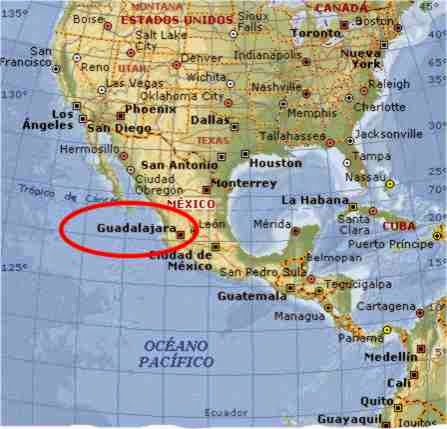
Guadalajara

We dream of travel; most people do, anyway.  Why?  Why is it that we want to take a step and voyage into a new world, culture, or dream?  Is it that we have a vision of another place being better?  Student’s that travel from other lands to live here in Colorado get to experience a new and different world.  Is it better?  Do they miss home?  Is this place what they thought it would be?

While I was in college I spent a semester in Guadalajara, Mexico.  Up until that point, I had not really spent much time out of United States, much less Colorado.  I spoke Spanish from text books, not real life. I definitely knew how to order a beer and say hello but I could not hold a clear conversation. Honestly, I struggled to acclimate to a new culture and daily life.  I missed some of the conveniences from the United States like drinking water out of the faucet or knowing that when using your tooth brush in the morning that the cockroaches did not feast on it while you slept.  However, there were new conveniences in Mexico that I began to appreciate, like dropping off laundry at the Lavanderia and picking it up in two days, cleaned and folded, for less than $3.00!!
My Senora traveled with us to a beach where locals frequented.  We got there by a very old school bus, baby blue and most likely missing struts and shocks. We stayed in a hotel that was not fancy and if there is an electrical code in Mexico, our lodging was definitely not up to code.  I imagined as I fell asleep in the twin bed I shared with my back to my dear friend, that my only hope was that we were not sharing the twin with the squirrel size cockroaches that we just jumped over on the uneven sidewalk outside.   It is not even fair to discuss the restrooms situation so I will not give detail to that aspect; however, as we sat on the beach and watched twenty kids playing and laughing hysterically as their parents watched and discussed life, you couldn’t help but admire the calmness, laughter and the moment of connection.    
Upon my return to the United States I had the unexpected struggle getting back into my old life.  The exposure to another world created a frustration in me when looking at, dare I say entitlements, from Americans’.   I wrestled with trying to understand why we do not have more gratitude for our blessings.  I did know now how grateful I was for the material gifts I experience as an American but was somewhat disillusioned by how whether the material rewards made us happy.  Every experience in my traveling was different, and therefore scary; yet when I reflect on my “globe-trotting” I feel so lucky to have been in another world for four months.  I learned the beauty of culture; another’s and my own, and gratitude for my experience and all of my blessings.  It is my intent to encourage students that I work with at the Community College of Denver if given the opportunity to travel, take it. 

Monday, July 14, 2014

Analytics 101

The future of higher education is analytics, and the future is now.

The analytics approach uses student data to proactively assess student needs, thereby producing actionable intelligence. Contrast analytics with the more traditional paradigm of reporting. In the latter, an organization uses data to identify results, such as the percentage of students that graduated within three years. In the analytics approach, on the other hand, an organization uses data to discern the opportunities and challenges facing a particular student at a particular time.

Numerous programs around CCD are already utilizing analytics to increase student success and enhance organizational efficiency (whether said programs realize it or not!). For example, the TRIO Student Support Services (SSS) program quantifies ten data markers to create a persistence score that feeds into a triage model of advising. TRIO SSS is also piloting a course predictor analytic that utilizes a student's previous academic performance in specific courses to discern the relative challenge of a particular course or course set in the upcoming semester.

"Know where to find information and how to use it; that is the key to success," notes a data wonk's proverb often attributed to Albert Einstein.

It is certain that higher education is swimming in an Olympic-sized pool of data. We can run report after report after report about demographics, success rates, enrollment, and much more. The siren call of analytics is search these data for variables with high explanatory and predictive power, as deciphered by contemporary social science and statistical methodologies. These data variables shine light on the path to increased student success and organizational efficiency.

Guided by data and research experts at the Higher Learning Commission, the Persistence and Completion Committee (PCC) at CCD is diligently swimming through that Olympic-sized pool of data in search of the most impactful variables of student success. Toward this end, the PCC is carrying out a social scientific inquiry using historical data from Institutional Research; student surveys of new, exiting, and graduating students; a meta-analysis of program level data from across the institution; and a qualitative analysis of anecdotal data accrued through the wisdom and experience of faculty and staff practitioners.

Identifying the impactful data variables at CCD is but the first step. Future directions include determining and implementing the information technology solutions to aggregate the data variables and process the statistical algorithms required by multivariate analyses. Then it will be onto creating intuitive and accessible analytics tools for implementation by faculty and staff practitioners.

The process will be both easier and more difficult than it sounds. Much like the game of chess, it is not that difficult to get down the basics, but the perfection of the craft will take much experimentation and learning as an institution.

The future of higher education is analytics, and the future is now.

Friday, June 27, 2014

Trust and the Leap of Faith

Charcoal clouds to the west lie low on the mountains. An acerbic sun shines harshly on the San Luis Valley, any hint of its warmth whisked quickly away by the winter wind. The highway runs directly from point A to point B, with nothing but the occasional tumbleweed blocking the view of the San Juan, Sangre de Christo and Culebra ranges.

I can see them a mile away, broken-down on the side of the road. Two people with thumbs out, a string of vehicles march past unabated. I pull over.

They come to my window, arms pulled in tight against their body, hands shoved into pockets, woefully under-dressed for the weather. Their truck broke down an hour ago, they say; they just need a ride a few miles up valley; I am the first one that stopped. The margin between subconscious and conscious - the land of biases and survival instincts - automatically takes notes and raises a few red flags.

This much is certain - they are quite cold.

Conversation lowers my guard as we roll together down the highway. A cell phone battery died; a deadbeat friend decided to go bowling in Monte Vista instead of coming to help; a girlfriend had to work until 7:00; a step-brother is living at the family shack and trying to get his life together after a stint in juvenile.

I am directed left onto a dirt road, a mile later right onto a smaller dirt road. "It is just a little further." Then left onto what would pass as a cow path if it weren't for the cattle guard blocking bovine progress. We pass by the middle of nowhere. We are ostensibly heading toward said shack.  "It is just a little further. Just a little further."

I attempt to be discreet with my cell phone at the ready. Not that there is any signal out here.

They are profuse in their gratitude, in a profanity-laced sort of way. It reminds me of some of my roughneck cousins back home; I smile. A spiritual happiness of sorts wells up, like when you realize that the world just might not be as messed up as it sometimes seems. The valley graces me with sanguine alpenglow.


Trust - it is at the core of effective relationships, communities, and organizations.

In The Speed of Trust, Stephen M.R. Covey asserts four key components of trust, from the organizational perspective. 1) Integrity to walk your talk. 2) Intent to pursue straightforward motives based on mutual benefit. 3) Capabilities that inspire confidence to get things done. 4) Results that reveal our track record and follow through.

I add a fifth key component: the leap of faith.

My decision to pick up the young men stranded in the high desert at the height of winter with the sun quickly absconding probably falls under Covey's concept of blind trust (as opposed to smart trust). It involved an unidentifiable risk of the unknown. But I took this leap of faith with great intentionality. Sometimes a leader needs to risk one's sense of self in order to prove that greater ideals still animate our higher potential, regardless of the naysayers (and they are many).

Now I don't advise that you pick up hitchhikers on a daily basis, metaphorical or otherwise. My episode was a moment in time in which the stars aligned to provide me with a test of my own personal integrity to walk the talk. But I do advise that you take smaller leaps of faith frequently to demonstrate the trust that you place in your family, friends, neighbors, and colleagues.

The realist in my office likes to protest: "But Troy - what if they take advantage of you?!?"

Some have and others will. But far more have graciously honored the trust I have offered them. I am certain that exposing my flank engenders reciprocity of trust in the great majority. And I wager that each act of vulnerable trust nudges the great needle of the universe toward a fuller realization of our true potential.

I am as strategic as they come. In fact, my Meyers-Briggs preference is colloquially known as Mastermind. By default, then, I am prone toward smart trust, to weighing the pros and cons of an action, to treat trust as a sort of leadership capital to be expended along the lines of a budget. But we cannot conflate trust with strategy masquerading as trust. We must take the leap of faith - though the naysayers will say "ill-advised" - in order to enliven the true bond of trust.

Wednesday, June 4, 2014

Commencement and Discontent

I am a commencement banner assistant. On that wonderful evening in May, I march in with the graduates of Community College of Denver. The energy is electric! I hear stories of success from the students. I give high fives to grandmas in the front row as we proceed into the arena. I cheer my lungs out when TRIO graduates walk across the stage. It is hard to be anything but beaming!

Yet, despite my joy, I cannot escape the discontent. It subtly yet darkly seeps into the perimeter of my vision. The empty space surrounding the graduates manifests the void, the 85% of students that start at Community College of Denver yet fail to reach this penultimate moment. Where are they, if not here tonight?

I know that student success takes multiple shapes and forms, and graduation is not the sole marker. Students swirl through higher education as their life ebbs and flows. There are things both within and outside of the control of the student and the institution.

Yet, the void stirs indignation.

I know the minimal graduation rates are not due to lack of effort on behalf of our students, faculty, and staff. I witness many a determined student putting in long hours at school only to work the night shift. I observe faculty bending over backwards to facilitate student learning. And I see staff deploying expansive and intentional support programs.

Yet, the void stirs indignation.

I know that CCD opens doors and takes risks on students even when the road is long and the hill steep. I am wary of completion strategies that limit access. I believe that any time spent in higher education, even if incomplete, benefits the student and society.

Yet, the void stirs indignation.

Therefore, it is time to take our effort to the next level of sophistication.The mission of the Persistence and Completion Committee (PCC) is to assesses CCD-specific data to drive persistence and completion strategies while fostering a collaborative institutional culture and advocating more universally for improved measures of student success.

The PCC is a cross-functional team with a robust five year plan and the guidance of data mentors at the Higher Learning Commission. We are using institutional data, a longitudinal study, program and department level data, and student surveys to identify the key markers of success and most significant barriers to completion.

Our major deliverables include three meta-analysis reports, learning analytics tools, guided college-wide conversations, and publication of findings and successes to a wider audience.

More to come. For our students!


Tuesday, November 5, 2013

TRIO ROCKS!

TRIO programs emerged out of the civil rights movement and Lyndon Baines Johnson’s War on Poverty. In 1964, the Economic Opportunity Act established an experimental program called Upward Bound. By 1968, the federal government had launched two additional programs, Talent Search and Student Support Services [TRIO SSS]. These three programs were grouped together and the title TRIO was born. The name remains, though TRIO now consists of eight programs, adding Educational Opportunity Center (1972), Training Programs for Federal TRIO programs (1976), Ronald E. McNair Post-Baccalaureate Achievement (1986), Upward Bound Math and Science (1990), and TRIO Dissemination Partnership (1998).

Currently, there are over 2800 TRIO programs throughout the country that support 790,000 students with college dreams, from the 6th grade through Bachelor’s degree completion. Specifically, TRIO programs work with students overcoming obstacles to education, including limited income, first generation to college, and disability.

Some famous TRIO alumni include:
• Patrick Ewing - Coach, Olympian and Former Professional Basketball Player
• Bernard Harris - First African-American Astronaut to perform a spacewalk
• Gwendolynne Moore - US Congresswoman
• John Quinones - Correspondent for ABC news
• Joe Rogers – Former Lieutenant Governor of Colorado
• Jimmy Jam and Terry Lewis – Music Producers
• Franklin Chang-Diaz - First Hispanic Astronaut
• Troy Polamalu - Professional Football Player

Access without support is not opportunity. At Community College of Denver, TRIO SSS supports students through the obstacles while challenging them to high goals. Toward this end, TRIO SSS provides a wide range of services, including comprehensive advising (academic, financial aid and financial literacy, transfer, career and personal); a Summer Bridge program; campus visits throughout the region; social and cultural activities; and academic tutoring. Within these services, the program utilizes data to track student progress and provide intentional guidance. Throughout, TRIO SSS creates a welcoming and personalized home on campus where each student feels valued and safe to grow as a student and career professional.

With our long history of advancing educational opportunity for underrepresented students, TRIO programs fulfill leadership roles at the institutional, state and national level. Throughout the country, TRIO spirals out innovation and best practices for student access and completion.

--
Contributor Imane Benjelloun is an alumna of TRIO SSS at both Community College of Denver and University of Colorado Denver. Currently she is professional staff with TRIO SSS at CCD and will soon be a famous alumna of TRIO.

Thursday, October 17, 2013

Organic Leadership

Like the Sage on Stage approach to teaching, the Colonel on Horse approach to leadership views everyone else as passive recipients and benefactors of the omniscient and omnipotent one. Even if the Colonel has a good idea of where he or she is going - which is an assumption - everyone else will simply tread the exact same path and end up in the exact same place. Groupthink. Lemmings. Et cetera.

When I work with others, I put forth significant effort to be mindful of judgment. Judgment in and of itself is not necessarily problematic; in fact, it is necessary. Problems arise when we assume that our judgment is descriptive of an objective world, one that appears exactly the same to everyone else. I tend to agree with the postmodernist idea that an objective world may well exist, but we can only know through conditions of its emergence. For example, the wavelength of light that appears as a blue sky can be descriptively measured, but how we understand and make meaning of that appearance emerges through our language, emotions, culture, sensory receptors, and so on. Do we know, then, that the blue sky appears the same to all of us? Who is right?

Such a problematization of objective judgment is a problematization of the Colonel on Horse. Due to the objective and subjective divergences that exist on a team of individuals, it is an inefficient allusion laced with missed opportunity and egoism to have everyone else get in line and follow the leader.

Thus, I prefer the concept of organic leadership: cultivating ecosystems that produce a flourishing and vibrant community, concomitantly guiding diverse emergent energy toward a shared vision of success.

In this direction, I ascribe to three guiding tenets.

1. Create a culture of positivity. Your work environment is a cauldron of inspiration, where each individual realizes the significance and meaning of their contributions to the team's vision of success. Productivity is a corollary of fun and excitement. Be fresh air. Be sunshine. Create a vision to respond to the age-old question: Why does any of this matter?

2. Balance structure with autonomy. Each individual benefits from different levels of guidance and independence, often at different times in different stages of evolution within different responsibilities. Listen attentively to your teammates to find the sweet spot and support right balance. Sometimes you may need to be the Colonel on Horse, but other times you need to simply get out of the way!

3. Pursue open communication built on authentic relationships. Be curious about other people's thoughts and ideas and happenings. In an ecological world, all is interconnected and relational. Communicate honestly yet kindly through both the clear days and the stormy nights.

Monday, September 30, 2013

A Chaos Theory for Career Counseling?

Do career pathways and development arise from a carefully constructed plan that entails research, assessment tools and goal setting, or do career opportunities occur by a series of serendipitous chances from seemingly unrelated events?  These two career development concepts are discussed in a recently published book entitled: A Chaos Theory of Careers: A New Perspective on Working in the 21st Century (Robert Pryor, Jim Bright). As someone who facilitates the process of career decision making for many of those whom I serve, I have often struggled to reconcile these two ideas.

Personally, I’ve always felt extremely attracted to chaos theory; small changes in a dynamic system at one level will reverberate and amplify in unanticipated ways throughout interconnected levels of the system. The popular cultural idea of  this is captured in the concept of the “butterfly effect” coined by Edward Lorenz, whose wings set in motion a series of events that cascade into major and seemingly unrelated outcomes (like affecting the weather a continent away) .

I also fall under the belief (illusion?) that because scientific research, through sound principles, can illuminate causality between two or more things, it must have equal explanatory power for future causality. Take for instance the weather. Even if we can pull apart, examine and understand everything that led to a particular tornado’s occurrence we cannot predict that under the exact same set of circumstances another tornado would even form.  It’s not a matter of some measurement that might have been missed or some possible unknown “X factor”, it’s simply that a small change in the beginning or initial stages of a system impact later stages in different ways under the same exact conditions. There is no way to completely predict the exact outcome. A set or series of probable outcomes; yes, but an exact outcomes – never.

How does this relate to one’s own career or choice of future career paths? The traditional model of career advising seeks to help one become self-aware through a series of tools and instruments that help delineate one’s preferences, interests and values – a “best fit” model. Understand a person’s interests, values, and preferences, and then seek to match them with an occupation that best relates. We can call this the modernist approach or positivist approach.  The postmodern approach to career advising entails having the advisee construct meaning from past experiences (work, life, family, spirituality) and thereby bring to light a pattern (life theme, map, life meaning, etc) that can then be aligned with a particular career path. In a very tiny nutshell, these two concepts have been the major theories that have propelled the career development ideology for many decades.

The authors of the book propose a new theory that integrates both of these concepts in a way that values both of their contributions. “Open systems thinking” captures the general idea of a chaos theory of careers by arguing that systems have constituent parts contained in a dynamic system where boundaries are ill-defined and impacts from chance encounters, events and circumstances will impact these parts in unknown ways. Looking at your own career development. What unknowns arose that you could not have possibly anticipated and how have your decisions and your pathways diverged from even your best laid plans and goals?  Ultimately, we can incorporate chaos and the unknown into our career planning and we should seek to embrace this - not "factor out" or insulate ourselves from the vagaries of life's chances.

This book was an amazing read simply for the fact that it gave me vindication of sorts for my internal struggles in my role as a career advisor. Can we really ever make a perfect decision about our future careers? Can we account and plan for all possible scenarios and situations that might come about in the future? Yet the tools, instruments and self reflection that a career advisor utilizes with another is able to set one on a new path with new goals and a new vision of what their future life and work could be. However, a new path that is closed to the possibilities and impacts of future circumstances, chance meetings and seemingly new directions could miss the greatest career development possibility of all – a career path or occupational opportunity that one could have never possibly imagined in their wildest dreams.

Saturday, September 21, 2013

Helmets

I have on my shiny orange kayak helmet right now. I love wearing helmets! Even as I sit here in front of a computer, putting my thoughts to the page.

Why? Because there are a lot of sharp pointy rocks out in the world! If I am wearing my helmet, it means I am charging ahead, regardless. You do not need to wear a helmet if you live a safe, conservative life and avoid all difficult terrain. But recently, I have been wearing my helmet, and loving it!


You see, I have been preparing for a run at a new position at work over the last few months, a so-called leadership position. At first, I was uncertain if I was even interested in the new terrain, and in any case, a bit hesitant to put myself out there. But I made a choice, spurred on by a mentor: come what may, go for it! Consequently, I have been intensely studying all the book material - the policies, regulations, knowledge, theory, skills and strategies. That comes naturally to me. More of a challenge, I have also put myself out there on the social side - connecting with new people, forging partnerships, presenting at meetings, sharing my energy and vision with the wider world. This terrain is much scarier to me, sharp and pointy.


Here is the strange thing. The the risky terrain, the areas of reservation: my efforts charging ahead in these areas have been exhilarating! Good thing for my helmet. It gave me courage to chance it, protected me from the rocks.


It is too easy to let our fears and perceptions define the boundaries of our possibility. My natural mode has always been to think and observe, to process in my own head, to only share myself within a tight circle. There are strengths to this mode, strengths I still rely on today. But it is now becoming apparent that these natural ways of being can be hijacked by self-doubt, codified and institutionalized over the years into limiting thoughts, and turned into self-inflicted boxes defining our potential.


The core philosophy of my life is: becoming - grounded in our roots and growing toward the light. Here you find my most foundational assumption; if we all have this opportunity and realize enough to take it, then we as an interconnected whole evolve ever closer to goodness and truth, a just and joyous world. 


I still do not know if I will be selected for this particular position that I am applying for, and in a way, it does not really matter. Far greater a reward the process has already granted. I have taken a new leap in my journey of becoming, and ascended beyond certain self-conceived limitations. Now, from this new vantage point, I see even higher mountains to climb.


Thursday, August 29, 2013

Advising with Mental Health In Mind

Several weeks ago, I attended a training on "Prevention and Response" with regard to student behavior.  While the training was informative and provided the necessary protocol for handling students who could pose a threat to safety on campus, I left feeling as if there could have been more information on addressing self-reported or suspected mental health issues in students.  Only days later, I came across an article in The Mentor  titled “The Prevalence of Mental Health Issues Among College Students: How Do Advisors Equip Themselves?” in which Lori Corley asserts that advisors have a responsibility in assisting students in accessing mental health treatment and shared some simple tips for doing so.  The training and then subsequently the article could not have intersected at a better time for me as I was grappling with trying to strike a balance in reporting the behavior and also helping the student access services.
According to Lori Corley, “75 percent of lifetime cases of diagnosable mental disorders begin by the age of 24”. 
This data should inform advising by taking into consideration the many responsibilities students are managing and how they are being impacted as a large number of our students are at risk based on age alone.
“Oftentimes varying degrees of stress and anxiety can trigger new mental health concerns or further exasperate existing ones,” states Corley. 
For many of our students, they are facing tremendous pressure and may be juggling more than traditional college students as they oftentimes work, have family responsibilities, or perhaps are the first in their family to attend college and are navigating a system that can seem daunting.    
Taking a moment to inquire about how things are going before moving forward with degreeworks can be an ideal time for advisors to gain insight into the student’s life.  In the event that a student discloses he or she is has mental health concerns during a conversation, advisors need to be prepared to make appropriate referrals, provide accurate and up to date resources, and be equipped to be a positive support for the student.
“Advisors may observe behaviors that could indicate underlying mental health issues or students may self-report their own concerns about their behavior.  In the latter case, it is important to listen to the students’ self-disclosure about concerns they have with their academics or other aspects of their life.  Asking open-ended questions about students’ overall satisfaction may encourage them to disclose feelings they are having or discuss issues they are facing.  And, of course, advisors need to be prepared to deal with behaviors and/or statements that indicate students may be planning to harm themselves” suggests Corley. 
“Academic Advisors should not feel it is their responsibility to counsel students with mental health issues or to recommend treatment.  Instead, advisors can observe students’ behavior and listen to self-disclosures, lend an ear, and refer students to the appropriate services available on campus,” stresses Corley.  
Encouraging a student to seek help and providing them with the assurance that they are not alone does not mean taking on the role of a mental health professional.  Rather, it is a necessary component of advising as we are able to have a significant effect on their future which is just as important as campus safety.

Wednesday, August 14, 2013

Digital Story-Telling

"As we are made of water, bone, and bio-chemistry, we are made of stories. The students that share their stories in our circles recognize a metamorphosis of sorts, a changing, that makes them feel different about their lives, their identities." - Joe Lambert, Director, Center for Digital Story-Telling

Digital story-telling has many uses in higher education. Students produce digital stories in the classroom as a learning activity and assessment tool. Faculty and staff create digital stories as teaching tools and outreach. Digital stories provide self-reflection, inspiration, connection, perspective, and new knowledge. Using accessible multimedia technologies and a straightforward template, we all can participate in the process of making meaning of our experience, and sharing those insights with the wider world!

So then, what is a digital story? The basic template includes a narration and images, merged together through video. The process of creating your own digital story is both easier and more difficult than you might expect. It is easier in that we all have amazing stories within us, and with a little guidance, current multimedia technology readily creates sharp productions. It is more difficult in that the craft of digital storytelling allows for endless nuance and perfecting, which quickly becomes apparent as you work through the creative process. Like chess, digital storytelling takes a little time to learn, but a long time to master.

Let's start with the basics. First and foremost, you need to decide on the story that you want to tell. Most fledgling storytellers focus on a personal story, as the material is immediately available. You may choose to tell a personal story based on an accomplishment, a struggle, an adventure, a choice, an identity, a philosophy, and - of course - a love. You may also tell a story about another person, such as a memorial to a grandparent, a biography of an inspirational figure, or the birth of a child. As story-telling creatures, we have seemingly unending capacity to make meaning - that is, to tell a story - about pretty much any aspect of our experience: a place, a tree, a star overhead.

What is the story you want to tell? What does it mean? And what does it really mean?

Draft your thoughts into a script, somewhere in the ballpark of 300-600 words. Keep in mind that you - or a suitable recruit - will narrate the script while showing images through a video production. Your first script does not need to be on par with Dostoevsky or Maya Angelou; do not be self-critical of your draft but rather focus on the process.

A few basic tips will get you a long way in honing your writing. First, own your emotions. You will feel vulnerable, but emotions make us human, and serve as a connecting point with an audience. It can be scary, but express your authentic self. Second, find the moment. A story distills down all the noise of life, and focuses on the heart of the matter. Is there a particular realization or event or object that crystallizes the meaning of your experience? Third, show instead of tell. Rather than say, "Bob was angry," say "With a quickened step, Bob stormed into the room, looking for a scapegoat."

A useful approach for refining the draft of your script is the story circle. Form a group and take turns reading aloud individual drafts. What worked and what didn't work? What was clear and what was a bit muddled? What images or phrases captivated? What emotions did you feel? If you choose to tell a digital story, you are going to feel exposed, so you may as well get used to putting yourself out there.

At the end of the day, your digital story will rise or fall based on the strength of your script.

With your script as scaffolding, start building a collage of images (photos, drawings, video) that reinforce your story. You may use your own personal images, or complete a Creative Commons search for non-copyrighted images. Also, you have the option to add music, but be careful not to overdo it or infringe on copyright.

Next, record a narration of your script. If you have a smartphone, you can easily record an audio file with numerous apps. Alternatively, you may use a tablet or laptop with a built-in mic, a stand alone mic connected to a computer, or a video created with a camera/camcorder (requiring you to extract the audio track). Expect to record your narration numerous times until you are happy with its pace and annunciation. You may use a free program such as Audacity to edit your narration.

The last step is to merge your audio (narration) and video (images) tracks into a single production. If you have a PC, you may use Movie Maker. If you have a Mac, you may use iMovie. You may also use a web-based program such as We Video. Are you a blooming director looking for more powerful editing capabilities? There are plenty of after-market software options, such as Apple Final Cut Pro, Cyberlink Power Director, or Adobe Premiere.

Now, go tell it on the mountain! Epiphanies are best when shared, especially when fresh on the soul.